Message from the Head Of Department

Welcome Address

https://antech.edu.gh/wp-content/uploads/2026/02/hod.jpg

Elements Name

Web Developer
It is a long established fact that a reader will be distracted by the readable content of a page when looking at its layout. The point of using Lorem Ipsum is that it has a more-or-less normal distribution of letters, as opposed to using ‘Content here.

Welcome to the Creative Arts Technology Department, where imagination meets innovation! To our new students, you are about to embark on an exciting journey that will challenge you to think creatively, push boundaries, and explore the intersection of art and technology. To our returning students, welcome back to another year of growth, discovery, and collaboration. This department is a space where your ideas can come to life, and we are thrilled to have you as part of our vibrant community.

To our dedicated staff, thank you for your unwavering commitment to nurturing the next generation of creative thinkers and technologists. Your expertise, passion, and guidance are the foundation of this department’s success. Together, we will continue to inspire students to explore new frontiers, experiment with cutting-edge tools, and develop solutions that blend artistry with technical skill

ELECTRICAL ENGINEERING TECH.

BRIEF ABOUT THE DEPARTMENT

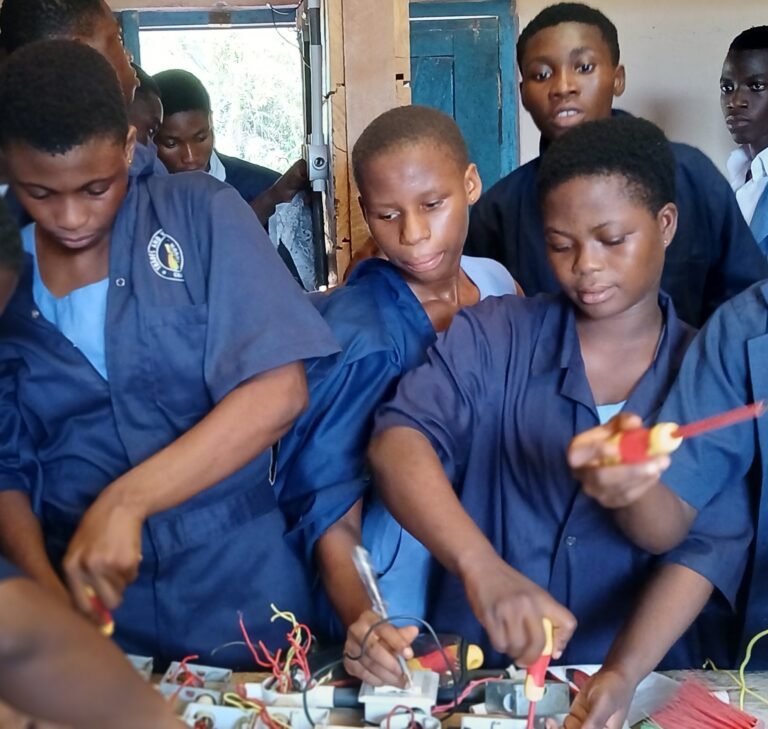
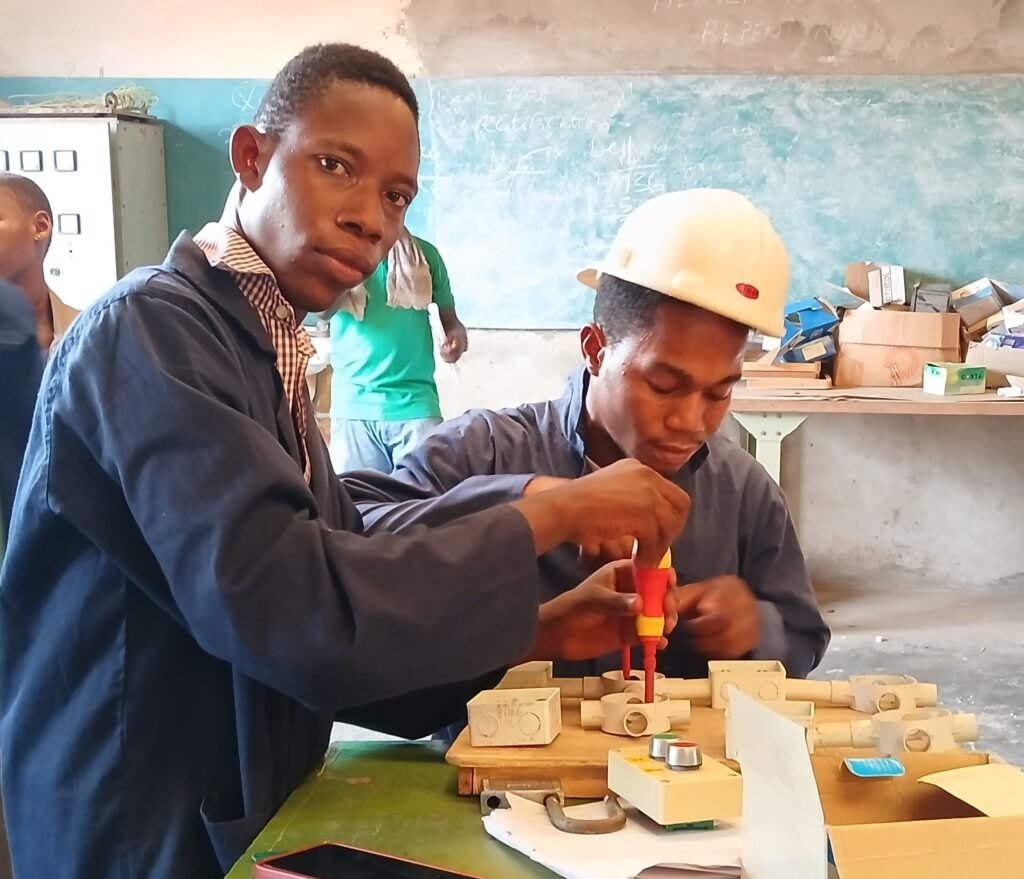
Electrical Engineering Technology (EET) is a dynamic and practical subject introduced in ANTECH to provide students with foundational knowledge and hands-on skills in electrical systems, electronics, and technology. It covers key areas such as circuit design, digital electronics, power systems, renewable energy, and automation. Through theoretical lessons and practical experiments, students learn to analyze, design, and troubleshoot electrical systems using tools like multimeters, oscilloscopes, and simulation software. The subject bridges the gap between science and real-world applications, encouraging creativity, problem-solving, and innovation.

  • Basic Electrical Concepts Voltage, current, resistance, Ohm’s Law, and circuit analysis.
  • Circuit Design & Analysis Building and testing series/parallel circuits, using breadboards, and interpreting schematics.
  • Power Systems Overview of AC/DC power, transformers, motors, and generators.
  • Electronics Introduction to components like resistors, capacitors, diodes, transistors, and integrated circuits.
Electrical Engineering Department

AIMS AND OBJECTIVES OF THE PROGRAMME

PRIMARY AIM

The overarching aim is to produce self-reliant, middle-level technical manpower equipped with practical skills and entrepreneurial mindsets to support Ghana’s industrialization agenda (such as the “One District, One Factory” initiative) and the energy sector.

To achieve this aim, the program focuses on several key instructional and professional pillars:

Installation & Maintenance: To equip students with the ability to install, operate, and maintain electrical systems in residential, commercial, and industrial settings.

Troubleshooting: To develop diagnostic skills for identifying and repairing faults in electrical circuits, machines, and electronic equipment.

Modern Technology Integration: To train students in emerging technologies, including Programmable Logic Controllers (PLCs), industrial automation, and renewable energy systems (solar/wind).

Subjects

Trade Subjects for Electricals

Electronics Technology is a fundamental subject in the Electrical Technology programme for TVET schools. It provides students with essential knowledge and hands-on skills in electronic components, circuits, and systems, preparing them for careers in electrical and electronics engineering fields.
Electronics Principles is a core subject in the Electrical Technology curriculum for TVET schools. It provides foundational knowledge of electronic components, circuits, and their applications in electrical systems. This subject bridges theoretical concepts with practical skills, preparing students for careers in electronics, automation, and electrical maintenance.
Workshop Principles is a hands-on, practical subject in Electrical Engineering Technology programmes at TVET (Technical and Vocational Education and Training) schools. It equips students with essential workshop skills, safety practices, and fabrication techniques needed for electrical installations, repairs, and maintenance.
Technical Drawing is a precise and detailed form of drawing used to visually communicate ideas, designs, and specifications for objects, structures, or systems. It is a fundamental tool in fields such as engineering, architecture, manufacturing, and construction.

check out carrier plans

carrier Prospects in Electrical technology

  • Telecommunications: Network providers like MTN, Telecel (Vodafone), and infrastructure firms like ATC Ghana employ graduates for power backup systems, fiber optics, and cell site maintenance
  • Electrical Technician: Installation of domestic/industrial wiring, motor rewinding, and troubleshooting equipment.
  • Automation & Control Specialist: Programming PLCs and maintaining automated production lines in factories (e.g., Kasapreko, FanMilk).
  • Certified Wiring Professional (CWP): Obtain a license from the Energy Commission of Ghana to legally certify electrical installations.
  •  
5
DEDICATED TEACHERS
100
STUDENT BOYS
50
STUDENT GIRLS
150
OVERALL STUDENTS