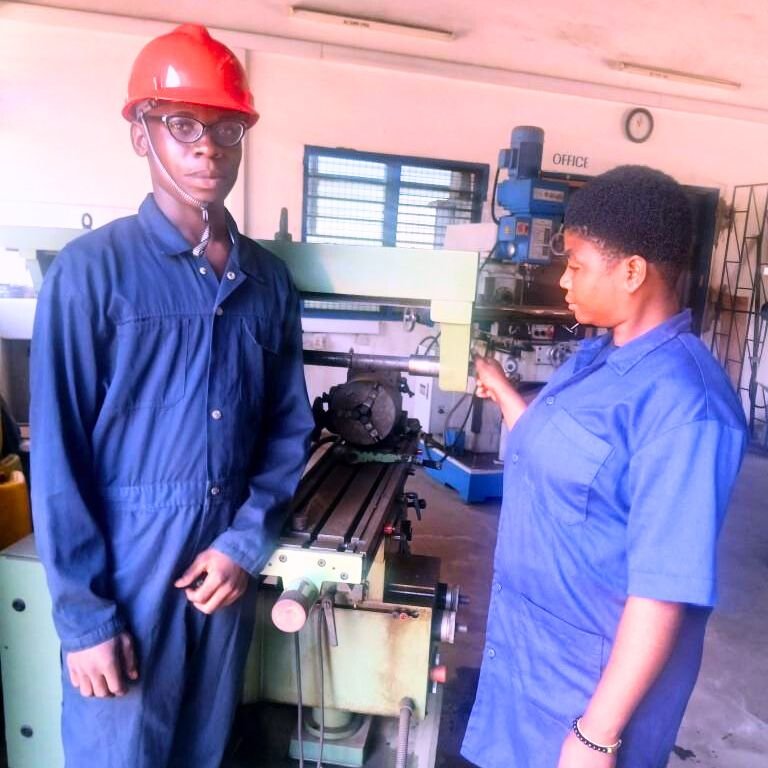
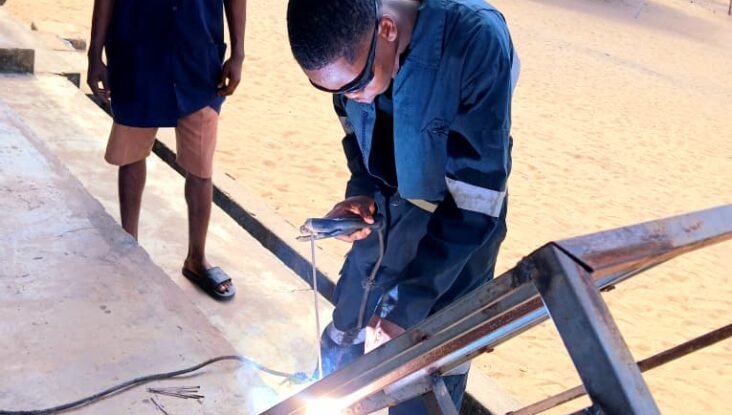

Overview of Welding and Fabrication Technology
In the Technical and Vocational Education and Training (TVET) sector, particularly within the framework overseen by bodies like Ghana’s Commission for Technical and Vocational Education and Training (CTVET), Welding and Fabrication Technology is a cornerstone program. It is designed to transform raw metal into functional structures, bridging the gap between engineering theory and practical, industrial application.
Why choose this course?
- High Employability and Industry Demand
- Low Barrier to Entrepreneurship
- Immediate Practical Utility
- Global Career Mobility
- Income Potential
- Foundation for Advanced Engineering
Career Prospect
-
Oil, Gas, and Energy: Pipeline welders and maintenance technicians for offshore and onshore infrastructure, as well as roles in emerging sectors like renewable energy installations.
-
Mining and Heavy Machinery: Maintenance fabricators responsible for repairing excavators, conveyor systems, and specialized drilling equipment.
-
Construction and Infrastructure: Structural welders and steel fabricators for commercial buildings, bridges, and large-scale civil engineering projects.
-
Thermal Cutting & Gouging: Proficiency in using oxy-acetylene torches and plasma cutters to shape thick metal plates and pipes.
-
Fabrication & Assembly: Skills in sheet metal work, structural steel assembly, and pipe fitting. This includes bending, rolling, and tack welding components before final joining.
-
Metallurgy & Heat Treatment: Understanding the atomic structure of metals and how heat affects stress, strain, and distortion during the welding process.
-
Inspection & Quality Control: Learning to perform Visual Inspection to identify defects (like porosity or undercut) and conducting Non-Destructive Testing (NDT) to ensure structural integrity