Welcome Address
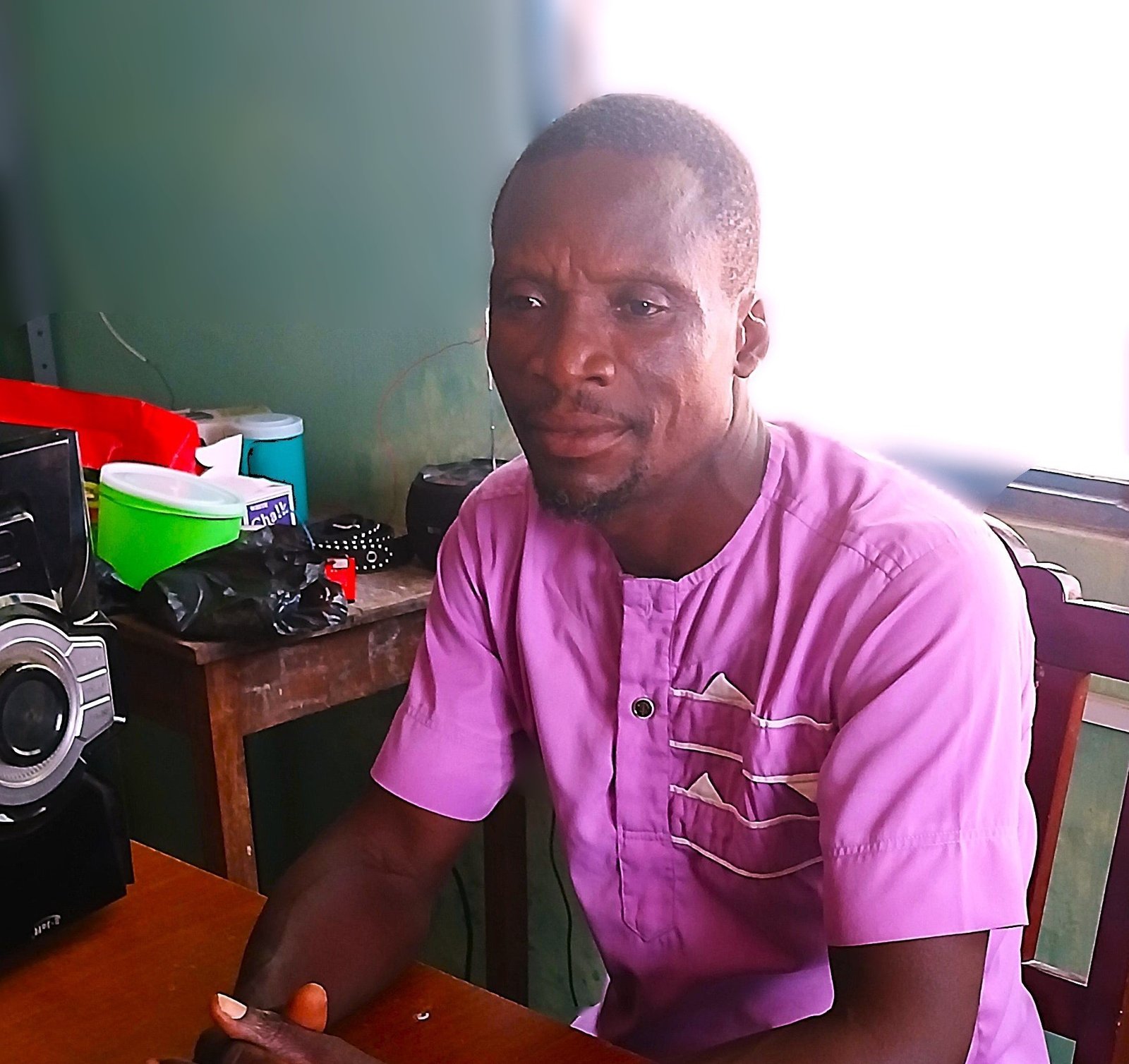
Mr. Ahiatsi Anthony
Head of Department
Mr. Ahiatsi Anthony
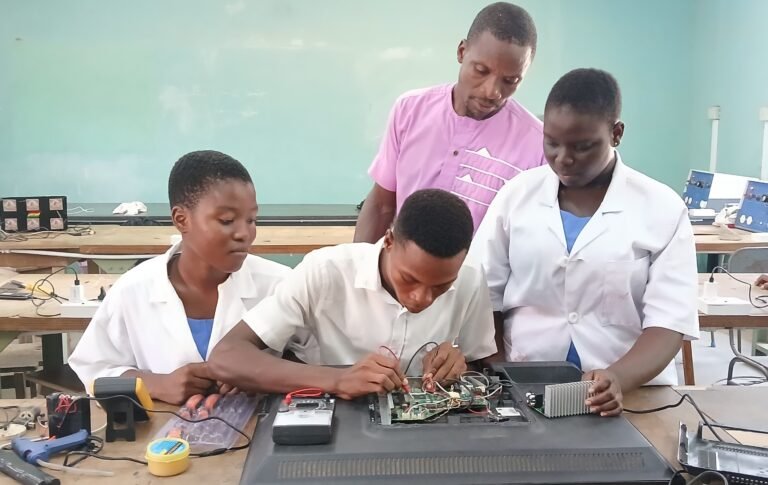
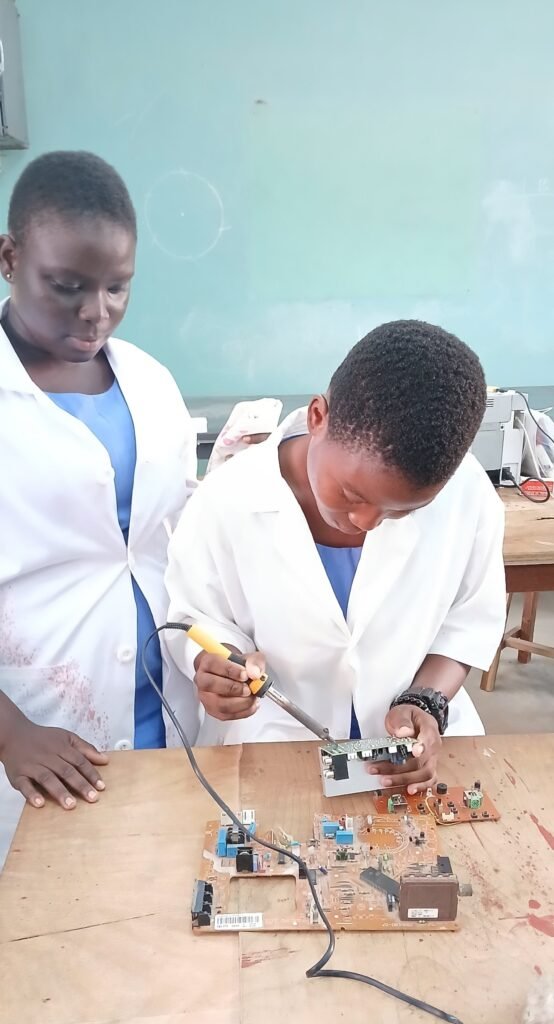
Head of DepartmentIt is my distinct pleasure to welcome you to the Department of Electronic Engineering Technology. In an era where digitalization, automation, and renewable energy are transforming the global landscape, our department stands as a beacon of technical excellence and innovation within the Ghanaian TVET sector. Our curriculum is strictly aligned with the Competency-Based Training (CBT) model, ensuring that you do not just learn about circuits and systems in a textbook, but master them through hands-on experience in our modern laboratories. Whether your passion lies in telecommunications, industrial automation, or solar energy integration, we are committed to equipping you with the “hard” technical skills and the “soft” analytical mindset required to solve real-world engineering challenges.
As you embark on this professional journey, I encourage you to embrace the rigors of the workshop and the creativity of the design lab. Our faculty of seasoned engineers and industry practitioners are here to mentor you, bridging the gap between classroom theory and the fast-paced demands of the industrial floor. By choosing Electronic Engineering Technology, you are positioning yourself at the heart of Ghana’s industrial growth, preparing for a career that is as rewarding as it is essential. We are thrilled to have you with us and look forward to seeing the innovative solutions you will build during your time here. Welcome aboard!
BRIEF ABOUT THE DEPARTMENT
The study of Electronics Engineering Technology in Anlo Technical Institute introduces students to the foundational principles and practical applications of electronics and electrical systems. This field combines elements of engineering, technology, and applied science to prepare students for further education or careers in electronics-related industries.
- Basic Electronics: Students learn about electronic components such as resistors, capacitors, diodes, transistors, and integrated circuits. They explore how these components function and are used in circuits.
- Circuit Design and Analysis: This involves understanding how to design, build, and analyze simple and complex electronic circuits. Students learn to use tools like multimeters, oscilloscopes, and breadboards.
- Digital Electronics: This area covers binary systems, logic gates, microcontrollers, and digital signal processing. Students gain hands-on experience with digital circuits and programmable devices.
AIMS AND OBJECTIVES OF THE PROGRAMME
PRIMARY AIM
The Electronic Engineering Technology (EET) course has been redesigned under the Competency-Based Training (CBT) curriculum to move away from theoretical “chalk-and-talk” methods toward industry-aligned mastery.
The primary aim is to develop a workforce that can independently troubleshoot, design, and maintain the complex electronic systems powering Ghana’s industrialization.
Specific Objectives
To equip students with the skills to program and maintain Programmable Logic Controllers (PLCs) used in factory production lines.
To teach the integration of sensors and actuators to create “smart” automated systems.
To enable students to design and install Renewable Energy systems, specifically focusing on solar PV inverters and battery management systems.
To teach the maintenance of power electronic devices like Uninterruptible Power Supplies (UPS) and variable speed drive
Trade Subjects for Electronics Engineering
carrier Prospects in Electrical technology
Telecommunications Maintenance Engineer:With Ghana being a leader in mobile penetration in Africa, the demand for telecom infrastructure maintenance is constant.
Industrial Automation & Control Technician: In Ghana’s manufacturing hubs (like Tema and North Industrial Area), factories rely on automated systems to produce goods. As an automation technician, you are the person who keeps these “robot” brains running.
Biomedical Equipment Technician: Modern healthcare relies heavily on electronic diagnostic tools. These machines require specialized electronic knowledge to repair and calibrate. Servicing and maintaining MRI machines, X-ray equipment, patient monitors, and laboratory analyzers.
Renewable Energy (Solar) Systems Designer & Installer:
As Ghana pushes for greener energy, the solar industry has exploded. Electronic engineering technicians are uniquely qualified to handle the complex “power electronics” side of solar power.